Hue
HUE - Situated in the Centre of Vietnam, Hue used to be the former capital of the emperors of the Nguyen Dynasty. Thus, Hue has been one of Vietnam's main cultural, religious and educational centres. With diversified and beautiful landscapes, Hue possesses a unique and harmoniously beauty. Today, its main attractions are the royal tombs, notable pagodas and the remains of the Citadel. In 1993, Hue Citadel was recognized as a World Cultural Heritage Site by UNESCO and followed is Hue royal Musical declared as a World Intangible Cultural Heritage in 2003.
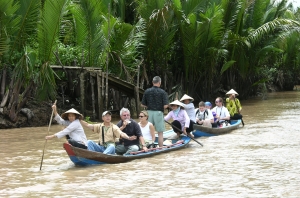
The Perfume River runs between the city of Hue and the remains of the Citadel, dragon boat trips as well as dinner cruises on the river are an enchanting way to see the city. Also, royal emperor Hue-style food is can not be missed experience.
Imperial Citadel
The Imperial City of Hue has long been a must-see attraction for tourists visiting a hidden charm of Vietnam. The Imperial City of Hue was actually a walled fortress and palace belonged to the ancient city of Hue which was a capital city of the Nguyen Dynasty for 140 years date back from 1805 until 1945.
The grandeur architecture was planned to be built in 1803 by Gia Long – an emperor who founded the Nguyen Dynasty. During 27 years from 1805 to 1832, the Imperial City of Hue was finally completed under the reign of Minh Mang, making it the most massive structure being built in the history of modern Vietnam involving thousands of workers, millions cubic meters of rock and huge volume of burden workload. It locates on the northern bank of Huong River, turning South with total land area of 520 ha. The place was made UNESCO Site in 1993 with the remained buildings being actively restored and preserved after the destruction from the Vietnam War.
The Imperial City of Hue has a circumference of 10 kilometers with the height of 6.6 meters and 21 meters thick with forts being meanderingly arranged, accompanied by cannons, artilleries and ammunitions. Initially the fortress was built solely by soil, only to be replaced by bricks afterward. Surrounding the city is the complicated canal system served not only as a protection but also as a waterway with nearly seven kilometers.
There are total of ten main majestic gates leading to the Imperial City of Hue, which can be divided into two main parts excluding houses and mansions: The Citadel and The Forbidden City. The former served to protect the important palaces inside while the latter was where the emperor and the royal family stayed as well as the court’s workplace. All the typically traditional Eastern architectures including majestic palaces, tombs and museums stand accordantly together to make an utmost amusing attraction right in the heart of Vietnam.
Thien Mu Pagoda
The pagoda is located at the end of Kim Long Road, in Huong Long Ward, on the northern bank of the Perfume River.
Coming to this prestigious sightseeing, visitors can enjoy both the scenery landscape and the typical traditional architecture of Hue pagodas. Thanks to its high position upward a charming curve of Perfume River, the pagoda offers a mind-boggling view of both the flow and the surrounding areas. Covered with pine trees, bonsai and delicate manmade pond, this religious site brings about a peaceful feeling which is hard to find anywhere else.
Minh Mang Tombs
Minh Mang Tomb is on the west bank of Perfume River and about 12km south of Hue City center. This place is where 2 tributaries join to form the picturesque Perfume River. The tomb was started constructing in 1840 under the order of King Minh Mang. After his death in 1841, King Thieu Tri continued the task, according to his father’s plan. The monument was finally completed 2 years later.
Minh Mang Tomb is a complex of 40 constructions: palaces, temples, pavilions, etc. Many said that it’s a perfect combination of manmade and natural beauty of Hue, where architecture fits harmoniously into the surrounding landscape. Looking from afar, the complex looks like a human being with the hill as his pillow and his hands and feet reaching to the river. From the front gate to the back door is almost 700m. The fence is high but does not block the view to mountains and Cam Ke Hill nearby.
Khai Dinh Tombs
After his ascendancy to throne in 1916, Emperor Khai Dinh chose the slope of Chau Chu (Chau E) Mountain, which is 10km from Hue center, to construct his “home in the other world” – according to Oriental belief. It was started bulding in 1920 and completed 11 years later, by his successor – Emperor Bao Dai. In order to complete the tomb, the rulers had to raise national tax to 30%. By then Vietnam sovereignty was lost to French invaders and Western culture was prevailing all over the country. Consequently Khai Dinh tomb is the result of the intermingling of Oriental and Occidental, Roman and Gothic style, Hindu and Buddhist style, as well as ancient and modern features.
Despite being the smallest, Khai Dinh Tomb is the most recent and costly amongst other Nguyen royal tombs. Khai Dinh chose to build his tomb by modern materials like concrete, slates and wrought iron, hence its appearance is quite gray and imposing.
The most notable place in Khai Dinh Tomb is Thien Dinh Palace, which contains bronze statues and steles of the King. Walls are densely decorated and inlaid with elaborate glass and porcelain designs. The most highlighted feature of this room is the intricate painting on the ceiling, illustrating nine dragons amidst fleeting clouds. Inside the tomb, there are two statues modelled the King: the one on the throne was sculptured in Paris in 1920 by Ducuing and Barbedienne
Hai Van Pass Vietnam-“De nhat hung quan”
Lying on Highway No. 1 on the border between Thua Thien-Hue province and Danang City, Hai Van Pass is not only one of the most scenic hillside roads in Vietnam but also the highest pass in the country. When joining tours in Vietnam and visiting this place, you will have a chance to discover peace, quiet and history along the way.
From the Hai Van Pass, You are able to see one of the major tourist attractions, which is the panoramic view of the Lang Co lagoon, Da Nang city, Tien Sa port, Son Tra peninsula and long white sandy beach.Whenever one goes through Hai Van Pass, two feelings are experienced: amazement at passing through the clouds and fear when seeing the dangerous bends of the road. A 21km-long road over Hai Van Pass, opened at the end of the 19th century, winds back and forth to a height of 435m above sea level. The drive over the pass gives the visitors thrill of tearing through the clouds on the winding road up and down the pass.
The Perfume River runs between the city of Hue and the remains of the Citadel, dragon boat trips as well as dinner cruises on the river are an enchanting way to see the city. Also, royal emperor Hue-style food is can not be missed experience.
Imperial Citadel
The Imperial City of Hue has long been a must-see attraction for tourists visiting a hidden charm of Vietnam. The Imperial City of Hue was actually a walled fortress and palace belonged to the ancient city of Hue which was a capital city of the Nguyen Dynasty for 140 years date back from 1805 until 1945.
The grandeur architecture was planned to be built in 1803 by Gia Long – an emperor who founded the Nguyen Dynasty. During 27 years from 1805 to 1832, the Imperial City of Hue was finally completed under the reign of Minh Mang, making it the most massive structure being built in the history of modern Vietnam involving thousands of workers, millions cubic meters of rock and huge volume of burden workload. It locates on the northern bank of Huong River, turning South with total land area of 520 ha. The place was made UNESCO Site in 1993 with the remained buildings being actively restored and preserved after the destruction from the Vietnam War.
The Imperial City of Hue has a circumference of 10 kilometers with the height of 6.6 meters and 21 meters thick with forts being meanderingly arranged, accompanied by cannons, artilleries and ammunitions. Initially the fortress was built solely by soil, only to be replaced by bricks afterward. Surrounding the city is the complicated canal system served not only as a protection but also as a waterway with nearly seven kilometers.
There are total of ten main majestic gates leading to the Imperial City of Hue, which can be divided into two main parts excluding houses and mansions: The Citadel and The Forbidden City. The former served to protect the important palaces inside while the latter was where the emperor and the royal family stayed as well as the court’s workplace. All the typically traditional Eastern architectures including majestic palaces, tombs and museums stand accordantly together to make an utmost amusing attraction right in the heart of Vietnam.
Thien Mu Pagoda
The pagoda is located at the end of Kim Long Road, in Huong Long Ward, on the northern bank of the Perfume River.
Coming to this prestigious sightseeing, visitors can enjoy both the scenery landscape and the typical traditional architecture of Hue pagodas. Thanks to its high position upward a charming curve of Perfume River, the pagoda offers a mind-boggling view of both the flow and the surrounding areas. Covered with pine trees, bonsai and delicate manmade pond, this religious site brings about a peaceful feeling which is hard to find anywhere else.
Minh Mang Tombs
Minh Mang Tomb is on the west bank of Perfume River and about 12km south of Hue City center. This place is where 2 tributaries join to form the picturesque Perfume River. The tomb was started constructing in 1840 under the order of King Minh Mang. After his death in 1841, King Thieu Tri continued the task, according to his father’s plan. The monument was finally completed 2 years later.
Minh Mang Tomb is a complex of 40 constructions: palaces, temples, pavilions, etc. Many said that it’s a perfect combination of manmade and natural beauty of Hue, where architecture fits harmoniously into the surrounding landscape. Looking from afar, the complex looks like a human being with the hill as his pillow and his hands and feet reaching to the river. From the front gate to the back door is almost 700m. The fence is high but does not block the view to mountains and Cam Ke Hill nearby.
Khai Dinh Tombs
After his ascendancy to throne in 1916, Emperor Khai Dinh chose the slope of Chau Chu (Chau E) Mountain, which is 10km from Hue center, to construct his “home in the other world” – according to Oriental belief. It was started bulding in 1920 and completed 11 years later, by his successor – Emperor Bao Dai. In order to complete the tomb, the rulers had to raise national tax to 30%. By then Vietnam sovereignty was lost to French invaders and Western culture was prevailing all over the country. Consequently Khai Dinh tomb is the result of the intermingling of Oriental and Occidental, Roman and Gothic style, Hindu and Buddhist style, as well as ancient and modern features.
Despite being the smallest, Khai Dinh Tomb is the most recent and costly amongst other Nguyen royal tombs. Khai Dinh chose to build his tomb by modern materials like concrete, slates and wrought iron, hence its appearance is quite gray and imposing.
The most notable place in Khai Dinh Tomb is Thien Dinh Palace, which contains bronze statues and steles of the King. Walls are densely decorated and inlaid with elaborate glass and porcelain designs. The most highlighted feature of this room is the intricate painting on the ceiling, illustrating nine dragons amidst fleeting clouds. Inside the tomb, there are two statues modelled the King: the one on the throne was sculptured in Paris in 1920 by Ducuing and Barbedienne
Hai Van Pass Vietnam-“De nhat hung quan”
Lying on Highway No. 1 on the border between Thua Thien-Hue province and Danang City, Hai Van Pass is not only one of the most scenic hillside roads in Vietnam but also the highest pass in the country. When joining tours in Vietnam and visiting this place, you will have a chance to discover peace, quiet and history along the way.
From the Hai Van Pass, You are able to see one of the major tourist attractions, which is the panoramic view of the Lang Co lagoon, Da Nang city, Tien Sa port, Son Tra peninsula and long white sandy beach.Whenever one goes through Hai Van Pass, two feelings are experienced: amazement at passing through the clouds and fear when seeing the dangerous bends of the road. A 21km-long road over Hai Van Pass, opened at the end of the 19th century, winds back and forth to a height of 435m above sea level. The drive over the pass gives the visitors thrill of tearing through the clouds on the winding road up and down the pass.